In recent years, a new mantra has taken hold in conversations about ageing: the goal should be to extend healthspan, not lifespan. At first glance, this sounds reasonable. Who wouldn’t prefer more years in good health over simply more years? Yet a closer look reveals that this framing not only oversimplifies the realities of ageing research but also obscures what biogerontology is actually trying to achieve.
This blog unpacks the paper’s argument and explores why restricting the goal of ageing research to “healthspan without lifespan” is not just misguided, but fundamentally incompatible with how medicine and biology work.
Where the Idea Came From—and Why It Spread
The term healthspan, describing the portion of life spent in good health, has existed for decades. But only in the 2010s did it explode into common use, driven in part by the geroscience movement and major organisations such as the U.S. National Institute on Aging. In this context, healthspan became a rallying cry, often promoted as superior to lifespan extension.
This framing made sense within geriatric medicine, a field that works within the practical limits of human longevity. Because maximum human lifespan appears to have approached a ceiling in the late 20th century, geriatric medicine quite reasonably focuses on preventing disease, reducing frailty, and compressing the period of illness at life’s end.
But biogerontology operates in a completely different philosophical and scientific space. And that difference matters.
Two Fields, Two Goals: Why Geriatrics Is Not Biogerontology
Geriatricians work within the constraints of human biology as it currently exists. Their patients will age, decline, and die, no matter how good the interventions. The best achievable outcome is often a shorter, gentler period of disability before a peaceful death—a scenario famously described through the analogy of the “one hoss shay,” a carriage that functions perfectly until it collapses all at once.
Biogerontologists, by contrast, are not restricted to the status quo. Their work reveals again and again that the rate of ageing is flexible. In animals—from nematodes to mice—interventions like caloric restriction, alterations in growth hormone signalling, and certain pharmaceuticals extend both healthspan and lifespan dramatically. Evolution itself demonstrates staggering longevity variation among mammals, suggesting that biological ageing is modifiable.
If ageing can be slowed, then both healthy years and total years increase together. It becomes incoherent to insist that only one of these outcomes is desirable.
Why the “Healthspan Not Lifespan” Slogan Fails
One of the strongest points the authors make is this: every medical field aims to save lives, and ageing biology is no exception. Doctors do not refuse to treat cardiovascular disease merely because preventing a heart attack might allow a patient to later develop Alzheimer’s disease and die more slowly. We accept longer life—even when it includes some frailty—because the alternative is death.
Extending life sometimes increases the duration of late-life morbidity, but this has never been considered a reason to withhold beneficial treatments. The same logic applies to ageing interventions.
Furthermore, when biogerontologists claim they are uninterested in extending lifespan, they inadvertently undermine their own scientific foundations. Many ageing-targeted interventions will inevitably increase lifespan if they succeed at reducing the burden of late-life disease. Ageing biology cannot be disentangled this way.
The Fear Behind the Mantra
So why do scientists sometimes distance themselves from lifespan extension?
The authors suggest several possible motives:
Concerns about being associated with anti-ageing charlatans and exaggerated longevity promises
Worries about overpopulation or economic strain caused by longer-lived populations
Pressure to align with funding priorities in geroscience and public health programmes
Yet these anxieties do not change the ethical and scientific reality: extending healthy life and extending overall life are intertwined outcomes of the same biological processes.
Ageing Research Should Be Honest About Its Goals
The paper calls for clarity and integrity. Biogerontology’s mission is to understand ageing deeply enough to modify it—improving late-life health and, inevitably, saving lives by delaying death.
The authors argue that embracing this dual goal is both scientifically accurate and ethically necessary. No doctor would deny a life-saving treatment on the grounds that the patient might spend more years in moderate frailty, and ageing researchers should not feel compelled to deny that their work could extend lifespan.
The central question, ultimately, is not whether preventing death might slightly increase time spent in disability. It is whether individuals prefer continued life—even imperfect life—to the alternative. Most do.
A Call for Humanistic Biogerontology
The “healthspan over lifespan” slogan risks reviving outdated, anti-humanistic philosophies that justify death as somehow beneficial. Instead, the paper advocates a more compassionate, honest framing: we study ageing to reduce suffering, improve function, and save lives.
Extending healthy years is crucial. Extending total years is good. And in practice, progress toward one will almost always promote the other.
Biogerontology should embrace the full scope of what it can offer—knowledge that could reshape the human experience of ageing itself.
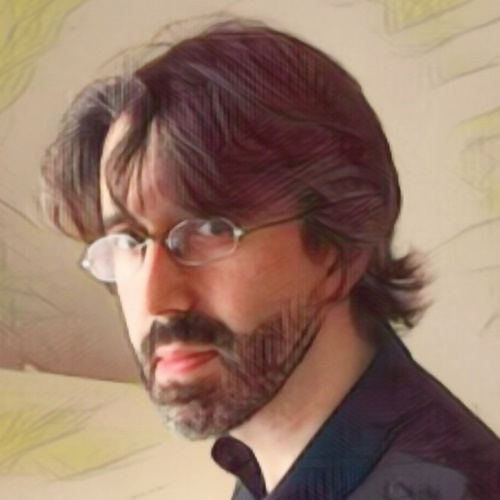
The study is published in Preprints.org. It was led by João Pedro de Magalhães from University of Birmingham and David Gems from University College London.