The human brain changes as we get older, and for many people those changes eventually chip away at memory, focus, and mental sharpness. Scientists have spent years searching for the biological drivers behind this decline, and one of the most promising leads points to something happening at the level of individual brain cells.
A new review article published in the journal Neurology International lays out the case for a group of tiny, damaged cells that seem to quietly poison the brain's environment as we age. The review also examines a class of experimental treatments designed to deal with these cells, some of which have already reached early human trials.
What worn out cells actually do
As cells in the body get older or damaged, some of them stop dividing entirely instead of dying off the way damaged cells usually do. Scientists call this state cellular senescence, and it was first discovered in skin cells grown in a lab.
A senescent cell does not just sit there quietly. It stays alive and metabolically active, and it starts pumping out a mix of inflammatory chemicals, proteins, and other molecules that researchers call the senescence associated secretory phenotype, or SASP for short.
In small amounts, this process is actually helpful. It stops potentially cancerous cells from multiplying and helps wounds heal, so early in life it works like a safety mechanism.
The trouble starts when these worn out cells build up over time instead of being cleared away, which is exactly what tends to happen as the body ages.
How this affects brain tissue
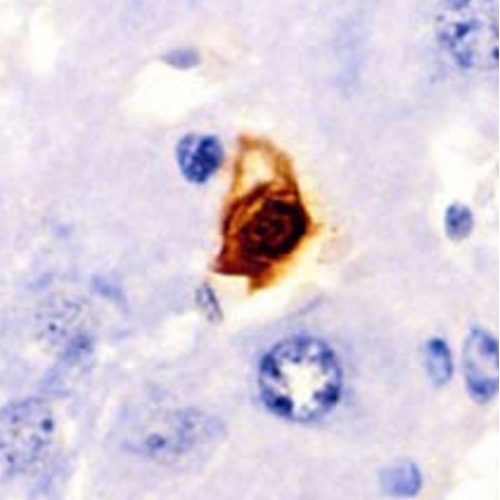
For a long time, scientists assumed cellular senescence mainly affected cells capable of dividing, but newer research described in the review shows that brain cells that rarely or never divide, including neurons, star shaped support cells called astrocytes, and immune cells called microglia, can also enter this damaged state. When they do, they release the same inflammatory SASP mixture, and this creates a low grade, long lasting inflammation inside brain regions tied to memory and decision making, including the hippocampus and prefrontal cortex.
Worse, this inflammatory signal does not stay contained to a single cell. Senescent cells can pass on similar damage to healthy neighboring cells through signaling molecules and tiny packets called extracellular vesicles, a spreading pattern researchers refer to as the bystander effect.
Over time this creates a feedback loop, where a small pocket of damaged cells gradually recruits more cells into the same unhealthy state. The review also points out that senescent cells that line blood vessels can weaken the blood brain barrier, the protective boundary that normally keeps harmful substances out of brain tissue.
Two strategies for treatment
Researchers have developed two broad approaches for dealing with these problem cells, and the review sorts them into two categories. The first group, called senolytics, works by directly triggering the death of senescent cells, essentially clearing them out of tissue altogether.
Two of the most studied senolytic compounds are dasatinib, a drug originally approved for certain blood cancers, and quercetin, a natural plant compound found in foods like onions and apples. Used together, these two compounds appear to work better than either one alone at clearing senescent cells from tissue.
The second approach, called senomorphics, takes a gentler route. Rather than killing off senescent cells, senomorphic compounds such as rapamycin and metformin work to quiet down the inflammatory SASP signal these cells produce, leaving the cells themselves intact.
Because senomorphics do not eliminate cells outright, the review notes they may carry a lower risk profile, which matters in the brain, where indiscriminate removal of cells could disrupt healthy tissue as well.
Encouraging results in animals
According to the review, animal studies provide some of the strongest evidence so far. Aged mice treated with the dasatinib and quercetin combination showed reduced numbers of senescent brain cells, lower levels of inflammatory markers, and measurable improvements on tests of memory and learning.
In mouse models of Alzheimer's disease specifically, the same treatment combination was linked to reduced buildup of two proteins associated with the condition, amyloid beta and tau. A longer six month study in monkeys, a much closer biological match to humans than mice, similarly found reduced markers of senescence and inflammation after treatment with the drug combination.
Where human testing stands
Early stage human trials mentioned in the review are still limited in scope but have produced some encouraging signals. Small trials testing dasatinib and quercetin in people with mild Alzheimer's disease or those at risk for it found the treatment was generally safe and tolerable, alongside modest improvements in some measures of cognition and mobility.
Separately, researchers looking back at health records found that people with diabetes who stopped taking metformin, a common diabetes medication with senomorphic properties, faced a higher rate of dementia diagnosis compared with those who kept taking it. These are still preliminary findings from early trials and observational data, not proof that these drugs prevent or reverse brain aging in humans.
Not a guaranteed fix
The review is careful to highlight results that complicate the picture, and this caution matters. In one study cited in the review, the dasatinib and quercetin combination improved memory in aging male rats but failed to do the same in aging female rats, hinting that hormonal differences may change how well the treatment works.
Another study found that the same drug combination did nothing to improve immune responses in older mice fighting off flu infection. A separate study went further, finding that dasatinib and quercetin actually worsened kidney damage in mice experiencing a sudden kidney injury, suggesting these treatments may backfire in some acute medical situations.
Hurdles still ahead
Several practical obstacles stand between these early findings and any real world treatment for people. Getting drugs across the blood brain barrier remains difficult, since many compounds that work well in the body struggle to reach brain tissue in useful amounts.
There is also no reliable, easy way yet to measure how many senescent cells someone has in their brain, since doing so would typically require invasive tissue sampling. Researchers are working on blood tests and brain imaging tools that could estimate senescent cell levels without surgery, though none of these are ready for routine clinical use.
Long term safety is another open question, given how limited existing human trials have been in size and duration. The review suggests that future treatments may need to be tailored to individual patients, taking into account factors like sex, genetics, and the specific health conditions someone is dealing with.
Brain aging remains a complex and stubborn problem, but this review suggests that targeting worn out, inflammatory cells offers a genuinely new angle for future treatment, even though much more research is needed before this approach becomes part of everyday medical care.
The researchers are affiliated with the School of Medicine at Nazarbayev University in Astana, Kazakhstan,
The study is published in the journal Neurology International.